What Actually Changed — Without the Panic
The A2L transition is the biggest equipment change since R-22 — compressed into a fraction of the runway. Here is what is actually true, verified against EPA rules, not supplier-counter rumor.
The AIM Act of 2020 directs EPA to phase down HFC refrigerant production and imports 85% by 2036. Under EPA's Technology Transitions rule, new residential and light-commercial AC and heat-pump systems manufactured or imported since January 1, 2025 must use refrigerants with a GWP below 700. That ended new R-410A equipment and brought in the A2Ls: R-454B and R-32.
Then the rules moved again — in your favor. On May 26, 2026, EPA finalized changes that eliminated the installation deadline for legacy R-410A systems built or imported before 2025. Remaining legacy inventory may now be installed with no cutoff date. Owners who wrote off that equipment — or panic-sold it at cost — left money on the table.
The Transition Timeline Every Owner Should Have on the Wall
| Date | What Happened | What It Means for Your Business |
|---|---|---|
| Dec 2020 | AIM Act becomes law — 85% HFC phasedown by 2036 | The clock starts on every HFC refrigerant you buy |
| Jan 1, 2024 | HFC production/import allowances cut to 60% of baseline (through 2028) | R-410A supply tightens; service refrigerant becomes a managed asset |
| Jan 1, 2025 | New residential/light-commercial systems must use refrigerants under 700 GWP | New equipment is A2L — R-454B or R-32 — with new handling, training, and stocking demands |
| 2025 | R-454B shortage: demand runs 5–10× forecasts; Honeywell raises prices 15% (Feb), 8% (Mar), then a 42% surcharge plus $4/lb (Apr) | Refrigerant volatility lands directly on your job costs |
| May 26, 2026 | EPA removes the installation deadline for legacy R-410A equipment built before 2025 | Remaining legacy inventory is sellable and installable again — no fire-sale required |
| Jan 1, 2029 | HFC allowances drop to 30% of baseline | The next R-410A price squeeze is already on the calendar — plan your service pricing for it now |
What the 2025 R-454B Shortage Taught Every HVAC Owner
The shortage is easing — the lesson is permanent. When a transition this size hits a supply chain this thin, the contractors who survive best are the ones running on systems, not scramble.
Contractors burned through R-410A equipment in late 2024, then switched to R-454B almost simultaneously in January 2025. Demand outran forecasts by 5 to 10 times within five months. A cylinder redesign batch failed testing. Components sat in the wrong warehouses. By spring, industry reporting found roughly half of contractors resorting to workarounds — cross-charging and mixing — that manufacturers refuse to endorse and warranties do not forgive.
Honeywell alone: +15% in February 2025, +8% in March, then a 42% surcharge announced in April — applied to orders back to February 15 — plus a $4-per-pound increase. Three increases in four months. If your flat-rate book was repriced annually, you absorbed every one of them.
Relief came through 2025 — Trane shipping units with extra charge, Arkema entering the R-454B market, cylinder production hitting record levels. But the structural lesson remains: during a transition, refrigerant behaves like a commodity market, and your pricing system has to be built for volatility.
The Five Business Impacts Nobody Prices In
1. Your Pricebook Has a Shelf Life Now
A flat-rate book repriced once a year was survivable in a stable market. It is not survivable when refrigerant moves 40% in a quarter. Reprice quarterly, line-item refrigerant, and protect the margin math your whole company runs on.
2. Inventory Became a Strategy, Not a Shelf
You are now managing two refrigerant ecosystems at once: A2L for new installs, R-410A for a decade of service on the installed base — against a supply schedule that drops to 30% of baseline in 2029. Cash tied up in cylinders is a decision. Make it on purpose.
3. The Repair-vs-Replace Conversation Changed Twice
In 2025, scarce A2L equipment pushed repairs. In 2026, EPA's rule change made legacy R-410A units installable again. Comfort advisors running an outdated script are guessing with your biggest tickets. Retrain the conversation on today's math.
4. Training Is Now a Liability Line, Not a Luxury
A2Ls are mildly flammable by design. Handling, transport, storage, and leak response all changed — and your insurer expects documentation, not intentions. Scheduled training with sign-off sheets is the cheapest insurance you will buy this year.
5. Cash Flow Feels the Equipment Price Climb
A2L systems carry redesigned coils, sensors, and controls — and transition-era price increases came with them. Bigger tickets mean financing options matter more, deposits matter more, and slow receivables hurt more. Tighten collections before peak season, not during it.
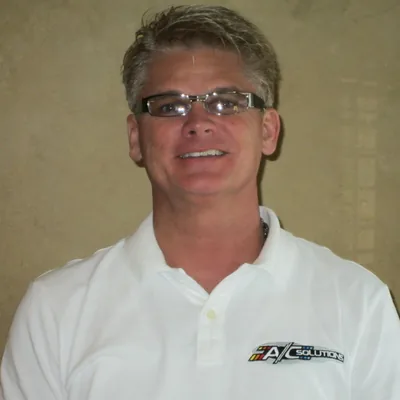
Leonard has spent 34+ years building, running, repairing, scaling and selling HVAC companies — starting his first from scratch in 1993 as the one man doing nearly everything. These systems were built under real pressure, with real payroll on the line. Not in a classroom.
The Owner's A2L Playbook
Six moves, in order. None of them require a consultant — all of them require a decision.
- Reprice the book this month, then every quarter. Pull your real refrigerant and equipment costs into the flat-rate multiplier. A book built on 2024 costs is a donation program.
- Line-item refrigerant on every invoice. Customers accept market prices they can see. They resent surprises they cannot.
- Decide your legacy R-410A position deliberately. The May 2026 rule change means pre-2025 equipment can be installed without a deadline. If clean legacy inventory is available in your market at the right price, that is margin — sold honestly to the right customer.
- Put A2L training on the calendar with sign-off sheets. Every tech, documented, refreshed. Your insurance carrier and your warranty claims will both ask.
- Rewrite the repair-vs-replace script. Give comfort advisors today's math: R-410A service cost trajectory to 2029 on one side, A2L equipment pricing and availability on the other. Honest options, presented clearly, close more.
- Track refrigerant margin by the pound. What you paid, what you charged, what walked off the truck. In a volatile market, untracked refrigerant is untracked money.
Every refrigerant transition since the 1990s has sorted contractors into two groups: the ones who reacted to it, and the ones who ran it as a system — priced it, trained for it, stocked for it, and sold through it. Leonard has operated through R-22's long goodbye and now A2L's fast arrival. The playbook above is the difference between a stressful transition and a profitable one.
A2L Transition: Frequently Asked Questions
Is R-410A banned?
No — and this is the most expensive misunderstanding in the industry. What ended on January 1, 2025 is the manufacture and import of new residential and light-commercial systems using refrigerants with a GWP of 700 or higher. R-410A itself remains fully legal for servicing every existing system, and under EPA's May 2026 rule change, legacy R-410A equipment built or imported before 2025 can still be installed — with no deadline. Your customers' existing systems are not obsolete, and repair remains a legitimate option you can sell honestly.
What exactly is an A2L refrigerant?
A2L is an ASHRAE safety classification meaning lower toxicity (A) and lower flammability (2L). The two A2Ls that replaced R-410A in residential equipment are R-454B (GWP about 466 — chosen by Carrier, Trane, and others) and R-32 (GWP about 675 — chosen by Daikin, Goodman, and others). Compare either to R-410A's GWP of roughly 2,088 and you see why regulators picked them. The flammability is mild — but it changes handling, transport, storage, and leak-response procedures, which means training and documentation.
Do my technicians need a new certification for A2L refrigerants?
EPA Section 608 certification is still the federal requirement — there is no separate federal A2L license. But equipment manufacturers, distributors, and updated safety standards expect A2L-specific training on handling, transport quantities, charging, and leak response, and your insurance carrier will expect you to be able to document it. Treat A2L training as mandatory whether or not a regulator makes you: an untrained tech with a mildly flammable refrigerant is a liability decision you already made by not deciding.
Should I still stock R-410A?
Strategically, yes. Every installed R-410A system in your market — which is most of them — will need service refrigerant for another decade or more, while the AIM Act squeezes supply: HFC production and import allowances are at 60% of baseline through 2028 and drop to 30% in 2029. Shrinking supply against a huge installed base is a price-pressure formula. Owners who manage refrigerant as an asset — bought deliberately, tracked by the pound, priced with margin protected — will win the service market. Owners who treat it as a truck consumable will quietly give that margin away.
What did the 2025 R-454B shortage actually do to prices?
Real, verified numbers: Honeywell raised R-454B prices 15% in February 2025, 8% in March, then announced a 42% surcharge in April — plus a $4-per-pound increase — as demand ran 5 to 10 times ahead of forecasts. Cylinders were scarce enough that industry reporting found roughly half of contractors resorting to workarounds manufacturers refuse to endorse. Supply improved through late 2025, but the lesson stands: in a transition, refrigerant is a volatile commodity, and your pricebook has to move with it.
How should I price jobs during the transition?
Three moves. One: reprice your flat-rate book on a schedule — quarterly at minimum — instead of once a year; a 42% surcharge you absorb is margin you donated. Two: line-item refrigerant honestly on invoices so price changes are the market's story, not your apology. Three: retrain the repair-versus-replace conversation: with legacy R-410A equipment installable again and R-410A service costs set to climb toward 2029, the honest math changed twice in eighteen months. If your comfort advisors are still running 2024's script, they are guessing. The pricing guide shows the full method.