34+ Years of Real HVAC Business Experience · Free 15-Minute HVAC Business Advice Call
Home HVAC Business Coach Alabama
Alabama · Birmingham & Statewide

HVAC Business Coach in Alabama

Alabama does not cap your license by tonnage the way Georgia and Texas do. Your ceiling is capability and capital, not paperwork. It is also the wettest, and among the coldest, of the markets we work in — Birmingham sees more freezing nights than Atlanta.

8,260
HVACR technicians employed in Alabama
No cap
Alabama licenses are not split by tonnage
47.0
Freezing nights per year in Birmingham
56.62 in
Annual precipitation — the wettest market we serve
The Alabama Market

Alabama Has No Tonnage Cap. That Is Worth More Than Owners Realize.

In Georgia a Class I license stops you at five tons. In Texas a Class B stops you at 25. In Alabama, the license does not decide your ceiling — you do.

StateCapacity Cap Written Into the LicensePractical Effect
GeorgiaClass I: 175,000 BTU heating / 60,000 BTU cooling (exactly 5 tons)Most light-commercial rooftop work is unbiddable on a Class I.
TexasClass B: 25 tons cooling / 1.5 million BTU/hr heatingA 30-ton rooftop is off the table without Class A.
AlabamaNo BTU or tonnage split. Two categories: Heating & Air Conditioning Contractors, and Refrigeration Contractors.Your ceiling is capability and capital, not paperwork. Growth into larger work is an operational decision, not a licensing project.
What to Do With That Freedom

An Alabama contractor who wants larger work does not need a multi-year licensing runway — they need the systems to deliver it: pricing that holds margin on bigger jobs, technicians trained for the equipment, cash flow that survives longer receivables, and a dispatch model that does not let a single large job wreck the residential board. That is a business problem, and business problems are solvable this year.

Alabama Licensing — And One Honest Warning

Two Numbers We Refuse to Publish

Conflicting Official Figures

While researching this page we found that the Alabama HACR Board's own website currently shows different figures on different pages for two items: the examination fee and the performance bond amount.

We could have picked the one we liked and printed it. We are not going to do that. A page whose entire promise is "we did the homework" has no business guessing at a bond figure you are going to budget around.

Call the Alabama HACR Board and get both numbers confirmed in writing before you plan around either one. The Board is located at 100 N. Union Street, Suite 986, Montgomery, AL 36104.

What We Could Confirm

ItemWhat the Board PublishesNote
CategoriesHeating & Air Conditioning Contractors; Refrigeration ContractorsTwo examination pathways. No tonnage split.
Active status"Contractors who perform HVAC or Refrigeration installation, service or repair"Annual fee $220.00
Inactive status"Individuals who DO NOT perform HVAC or Refrigeration installation, service or repair but wish to hold a contractor certification"Annual fee $110.00
All fees"All fees are non-refundable"Budget accordingly.
Examination feeNot published here — the Board’s pages conflict. Call the Board.
Performance bondNot published here — the Board’s pages conflict. Call the Board.
The Duct Cleaning Trap

Alabama's rules extend certification requirements to air duct cleaning, filter changing, replacement of air filters or filter media, and cleaning of HVAC/R equipment. If you are building a maintenance-plan or IAQ add-on line — exactly the kind of recurring revenue we normally push owners toward — confirm your certification covers it before you launch. This one catches good operators.

Our Verification Standard

Every licensing figure on this page came from the state board’s own website or its official application document. Every employment number came from the Bureau of Labor Statistics. Every climate figure came from NOAA. Where a number could not be confirmed at the primary source, we left it out rather than repeat it.

Licensing rules change. Confirm current requirements directly with the board before making a business decision. JordanWORX provides business guidance — not legal, licensing, or regulatory advice.

Market & Climate

Smaller Market, Wetter Air, Colder Winter

HVACR Technicians Employed — Alabama in Context
BLS OEWS, May 2025, SOC 49-9021.
Alabama (statewide)8,260 technicians
Birmingham metro2,370 technicians
Orlando metro — our headquarters5,140 technicians
Source: U.S. Bureau of Labor Statistics, Occupational Employment and Wage Statistics (OEWS), May 2025, SOC 49-9021 — Heating, Air Conditioning, and Refrigeration Mechanics and Installers. Retrieved via the BLS public API. bls.gov/oes

Alabama is the smallest of the three states we expanded into — 8,260 technicians statewide — and we would rather say that plainly than pretend otherwise. It is also a market where good systems are rarer, which cuts the other way for an owner who builds them.

Nights at or Below Freezing — Birmingham vs Atlanta vs Orlando
NOAA 1991–2020 normals. Birmingham sees more freezing nights than Atlanta.
Birmingham, AL47.0 nights
Atlanta, GA35.7 nights
Orlando, FL1.6 nights
Source: NOAA National Centers for Environmental Information, U.S. Climate Normals 1991–2020 (annual/seasonal), retrieved from the NCEI data service. Degree days are base 65°F. ncei.noaa.gov

Two facts that surprise people. Birmingham records more freezing nights than Atlanta (47.0 versus 35.7), and at 56.62 inches of annual precipitation it is the wettest market we work in — wetter than Houston, Orlando or Atlanta. Alabama is a humidity market and a real heating market, and Birmingham records more heating degree days (2,533) than cooling degree days (2,177).

Where We Are Based — Straight Answer

JordanWORX is headquartered in Orlando, Florida. We work with Alabama owners remotely and on-site. We are not going to invent a local office or a local phone number to look like something we are not.

Alabama shares Florida’s Hot-Humid Southeast, so the latent-load and labor-market playbook transfers well. What it adds is a genuine winter Florida never taught us to plan for — and we plan for it with your numbers, not a template.

For context: the largest names in HVAC coaching run out of Washington State, Minnesota and New Jersey and sell nationally. Remote-delivered coaching is the norm in this industry, not the exception.
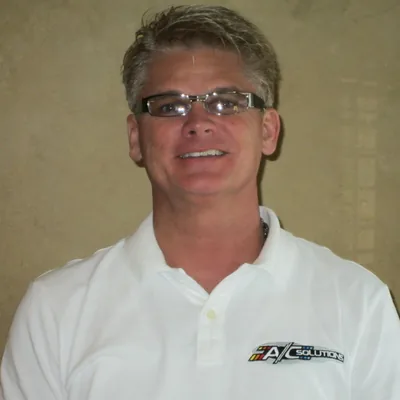
Leonard Jordan, founder of JordanWORX HVAC Business Builders
Leonard Jordan
Founder · JordanWORX HVAC Business Builders

Leonard has spent 34+ years building, running, repairing, scaling and selling HVAC companies — starting his first from scratch in 1993 as the one man doing nearly everything. These systems were built under real pressure, with real payroll on the line. Not in a classroom.

Alabama Metros

Where We Work in Alabama

We also work with owners in Huntsville, Mobile, Montgomery, Tuscaloosa, Auburn and across the state. Call (321) 534-8700.

Frequently Asked Questions

What license do I need to do HVAC work in Alabama?

Alabama regulates through the Board of Heating, Air Conditioning & Refrigeration Contractors (HACR). The board offers two examination pathways — Heating & Air Conditioning Contractors and Refrigeration Contractors — and two status options after examination: Active for those performing installation, service or repair, and Inactive for those who hold certification without performing the work.

Does Alabama cap license classes by tonnage like Georgia and Texas?

No — and that is a genuine structural advantage. Georgia caps a Class I license at 175,000 BTU heating and 60,000 BTU cooling (exactly five tons). Texas caps a Class B at 25 tons and 1.5 million BTU/hour. Alabama's HACR categories are not split by BTU or tonnage. Your addressable market is defined by capability and capital rather than by a number on a license.

How much does an Alabama HVAC license cost?

The board publishes an Active status annual fee of $220.00 and an Inactive status annual fee of $110.00, and notes that all fees are non-refundable.

We are deliberately not publishing the examination fee or the performance bond amount. The board's own website currently shows different figures for both on different pages. Rather than pick one and present it as fact, we are telling you the conflict exists — call the Board directly and get the current number in writing before you budget it.

Is it true that duct cleaning requires a license in Alabama?

This is one of the most commonly missed rules in the state, and it matters specifically to maintenance-plan and indoor-air-quality businesses. Alabama's rules extend certification requirements to work including air duct cleaning, filter changing, replacement of air filters or filter media, and cleaning of HVAC/R equipment. If you are building an IAQ or maintenance add-on line in Alabama, confirm your certification status with the Board before you launch it.

How does Alabama's climate compare to Florida's?

Wetter and considerably colder in winter. NOAA's 1991–2020 normals put Birmingham at 56.62 inches of annual precipitation — the highest of any market we work in, above Houston, Orlando and Atlanta — and 47.0 nights at or below freezing, which is more freezing nights than Atlanta and roughly 29 times Orlando's 1.6. Birmingham also records more heating degree days (2,533) than cooling degree days (2,177).

Do you give advice on Alabama licensing or code?

No — and be careful with anyone who does. We are business builders, not attorneys or license consultants. What we do is help you understand what a license class means economically: what work it lets you bid, what it locks you out of, and what upgrading would be worth in revenue. For the application itself, go to the Alabama HACR Board directly.

Let's Build It Right Where You Are.

Fifteen minutes with Leonard. Tell him where you are stuck. He will tell you straight what is really holding the business back.

No cost. No obligation. No pressure.