34+ Years of Real HVAC Business Experience · Free 15-Minute HVAC Business Advice Call
Home Resources Local Services Ads & PPC
Local Services Ads & Pay Per Click

Google Local Services Ads for HVAC: What Actually Changed

The Google Guaranteed badge is gone. The money-back guarantee is discontinued. Manual lead disputes were replaced. Most HVAC marketing pages still describe a program that no longer exists — here is the verified 2026 reality, and the math that tells you what you can afford to pay.

Oct 2025
Google Guaranteed became Google Verified
$90.92
Avg cost per lead, Home & Home Improvement
$8.33
Average cost per click in the category
Ranking
Your answer rate is a published LSA ranking factor
Start Here

Three Things Changed. Most HVAC Marketing Advice Has Not Caught Up.

If you are reading a guide that still shows a green Google Guaranteed badge and promises $2,000 in customer protection, you are reading a guide that is out of date. Here is the current reality, verified against Google's own documentation.

Google Guaranteed Is Now Google Verified

As of October 20, 2025, Google Guaranteed, Google Screened, and License Verified by Google were consolidated into one Google Verified badge. The green checkmark became blue.

The Money-Back Guarantee Was Discontinued

The consumer guarantee tied to the old badge is gone. Claims were only accepted for services booked before December 7, 2025. It is no longer a selling point you can advertise.

Manual Lead Disputes Were Replaced

Google now uses automated machine learning to assess and credit invalid or low-quality leads. And it no longer credits leads for job types or geographies you do not service.

Why This Is Your Advantage

Nearly every competing HVAC marketing page online still describes the old program. When you talk to a homeowner — or evaluate a vendor — knowing what actually changed makes you the credible one in the room. It also means the settings you used to fix with a dispute now have to be right the first time.

The Mechanics

How Google Local Services Ads Actually Work for HVAC

LSA is fundamentally different from traditional search advertising, and the difference is the whole point:

Local Services AdsTraditional Google Ads (PPC)
You pay forA lead — a phone call or messageA click, whether or not it becomes anything
PositionAbove traditional search ads, at the very topBelow LSA, above organic results
Entry requirementBackground checks, licensing, insurance verificationA credit card
Trust signalGoogle Verified badge displayed to the customerNone
Ranking influenced byReview score and volume, responsiveness, proximity, verification status, budgetBid, quality score, relevance
Bad lead handlingAutomated assessment and creditYou pay for the click regardless
Creative controlAlmost none — Google builds the adFull control of copy, extensions, landing page

The practical translation: LSA rewards operators, PPC rewards marketers. If you answer fast, get reviewed constantly, and are properly licensed and insured, LSA is built in your favor. If your phones go to voicemail at 4:45 on a Friday in July, LSA will quietly punish you for it.

Getting Verified

What HVAC Companies Must Have to Run Local Services Ads

Google classifies HVAC as an urgent category, which triggers an additional level of screening beyond what many trades face.

Operator Note

Technician-level background checks are not a paperwork nuisance — they are a recruiting consideration. Build the authorization into your hiring packet from day one so a new hire does not sit unproductive waiting on a screen. If you are rebuilding your hiring process anyway, start here.

Lead Credits

The Lead Credit System, Explained Without the Spin

Under the current system, Google assesses leads automatically rather than waiting for you to dispute them. In Google's own words:

Leads are first assessed when the potential customer makes initial contact, and leads determined to be invalid or low quality are not charged.— Google Local Services Ads Help documentation

Charged leads are then reassessed over time. When a credit is issued, it typically appears within about 30 days, and the original charge stays visible on your invoice alongside the credit — which is why your invoice can look wrong when it is not.

The Part That Costs Contractors Money

Critical Change

Google no longer supports credits for leads where the job type or the geography is one you do not service. Under the old system, an out-of-area call was a routine dispute. Today it is simply a lead you paid for.

That single change moves real money, and it makes three settings far more important than they used to be:

  1. Service area. Set it to where you will genuinely drive on a Tuesday in August — not to where you wish you had customers. Every mile of aspiration is now billable.
  2. Job types. Turn off what you do not do. If you do not touch ductless mini-splits, oil furnaces, or commercial rooftop units, say so. Every job type you leave on is a lead you will be charged for and cannot recover.
  3. Hours. If your ads run at 9 PM, someone answers at 9 PM. Otherwise you are paying for leads you cannot convert and damaging your responsiveness signal at the same time.

Note: Google states credits are not available in certain categories and regions, including healthcare, tax specialists, and EMEA.

The Operations Connection

Your Answer Rate Is a Ranking Factor

This is the part no agency can fix for you — and the reason LSA rewards well-run companies over well-marketed ones.

If you regularly fail to answer calls or respond to messages, your ad ranking may be affected.— Google Local Services Ads Help documentation

Read that again as an operator, not a marketer. Google is telling you that dispatch quality and phone coverage directly determine how often your ad shows. A missed call is not just a lost job. It is a lost job, a wasted lead charge, and a downgrade to your future visibility — three costs from one ring.

What Drives Your Local Services Ads Ranking
Factors Google publicly identifies as influencing LSA ad rank.
Review score and review volumePublished factor
Responsiveness to calls and messagesPublished factor
Proximity to the searcherPublished factor
Verification status (fully verified ranks higher)Published factor
Budget and biddingPublished factor
Source: Google Local Services Ads Help documentation. Bar lengths indicate relative emphasis for illustration; Google does not publish factor weightings.

The Fix Is a Staffing Decision, Not a Marketing One

Pay Per Click for HVAC Companies

PPC: Instant Demand Capture With an Instant Off Switch

Paid search does one thing extraordinarily well — it puts you in front of someone who is searching right now. It also stops producing the moment the card stops working. Used correctly, it is a seasonality tool and a replacement-lead tool. Used carelessly, it is the fastest way to fund someone else's growth.

Verified Search Advertising Benchmarks
Home & Home Improvement category — the closest published proxy for HVAC.
Average cost per lead$90.92
Average cost per click$8.33
Average click-through rate6.47%
Average conversion rate8.05%
Source: LocaliQ, Search Advertising Benchmarks, published June 2026. localiq.com. Important: LocaliQ does not break out HVAC separately — this is the broader Home & Home Improvement category. Treat it as directional, not as an HVAC target. Bars are scaled independently, not on a common unit.
Be Skeptical of HVAC-Specific Numbers

We looked hard for a credible, independently published HVAC-specific cost-per-lead figure. There is not one. Every number circulating online traces back to an agency citing its own unpublished internal data. When a vendor quotes you "the industry average HVAC cost per lead," ask where it came from. The answer is usually a blog post they wrote.

Where HVAC Ad Money Is Most Often Wasted

The Number That Decides

What You Can Actually Afford to Pay for a Lead

Your ad budget is a function of your average ticket, your margin, and your close rate. It is not a function of your revenue, and it is definitely not a function of what your competitor spends.

HVAC Maximum Cost Per Lead Calculator

Enter your real numbers. This tells you the ceiling — the most you can pay for a lead before the channel stops making you money.

Gross profit per closed job$216.00
Expected gross profit per lead$64.80
Leads needed per closed job3.3
Maximum sustainable cost per lead$12.96

How to read this: if a channel costs more than your ceiling, the channel is not necessarily wrong — your ticket, margin, or close rate may be. Raising close rate from 30% to 40% moves this number more than any bid adjustment ever will. Calculations run entirely in your browser; nothing is sent anywhere or stored.

The Uncomfortable Truth

Most owners run this and discover their ceiling is well below what leads actually cost. That is not a reason to quit advertising. It is a reason to fix pricing and closing first — because those two levers change the ceiling itself. Marketing amplifies whatever economics you already have. Start with pricing →
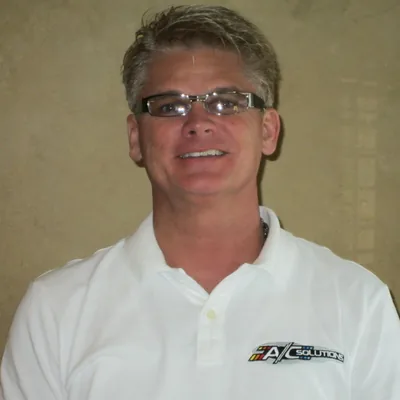
Leonard Jordan, founder of JordanWORX HVAC Business Builders
Leonard Jordan
Founder · JordanWORX HVAC Business Builders

Leonard has spent 34+ years building, running, repairing, scaling and selling HVAC companies — starting his first from scratch in 1993 as the one man doing nearly everything. These systems were built under real pressure, with real payroll on the line. Not in a classroom.

Choosing Your Mix

LSA vs PPC vs Local SEO: What Each One Is For

Local Services Ads

Best for: high-intent calls, fast

  • Pay per lead, not per click
  • Sits above all other paid results
  • Verification builds instant trust
  • Rewards fast answering and fresh reviews
  • Almost no creative control

Pay Per Click

Best for: control and seasonality

  • Full control of message and landing page
  • Instant on, instant off
  • Target replacement vs service separately
  • You pay whether or not it converts
  • Needs active management to stay efficient

Local SEO & Business Profile

Best for: durable, compounding presence

  • Free to appear; earned, not bought
  • Driven by reviews, categories, proximity
  • Compounds month over month
  • Will not rescue a slow week
  • Google publishes no ranking timeline
The Operator's Sequence

One: Fix answer rate and booking rate — both paid channels are priced on them. Two: Get verified and turn on LSA with tight service area and job types. Three: Build review velocity in the field. Four: Layer PPC into the gaps LSA does not cover. Five: Let local SEO compound underneath all of it. Skipping step one makes every step after it more expensive.

Questions Owners Ask

Local Services Ads & HVAC PPC: Frequently Asked Questions

Is Google Guaranteed still available for HVAC companies?

No — not under that name. Effective October 20, 2025, Google consolidated the Google Guaranteed, Google Screened, and License Verified by Google badges into a single "Google Verified" badge, and the checkmark changed from green to blue. Most HVAC marketing sites still show the old green Google Guaranteed badge and describe a program that no longer exists in that form.

Does Google still offer the $2,000 money-back guarantee on Local Services Ads?

No. Google discontinued the money-back guarantee associated with the Google Guaranteed badge as part of the same October 2025 change. Consumer reimbursement claims were only accepted for services booked before December 7, 2025, and had to be filed within 30 days. Any HVAC marketing page still promoting "up to $2,000 in Google backing" as a current selling point is out of date.

Can I still dispute a bad Local Services Ads lead?

Not the way you used to. Google replaced manual lead disputes with an automated, machine learning-driven credit system. In Google's words, leads are "first assessed when the potential customer makes initial contact, and leads determined to be invalid or low quality are not charged." Charged leads are reassessed over time, and credits typically appear within about 30 days while the original charge stays visible on the invoice. Importantly, Google states it no longer supports credits for leads where the job type or geography is one you do not service — so your service area and job type settings now carry real money.

What does an HVAC company need to qualify for Local Services Ads?

HVAC is an eligible category, and Google classifies it as an urgent category that receives an additional level of screening. That means a business background check, an owner background check, and service professional background checks at the technician level. You will also need state-level business and owner licensing where local law requires it, plus both general liability and professional liability insurance.

Does answering the phone affect my Local Services Ads ranking?

Yes, directly. Google states that "if you regularly fail to answer calls or respond to messages, your ad ranking may be affected." Fully verified advertisers also rank above advertisers who have not completed verification. This makes LSA performance an operations problem as much as a marketing one — your answer rate is a ranking factor.

How much does pay per click cost for HVAC companies?

There is no verified HVAC-specific published figure. The closest credible benchmark is LocaliQ's 2026 search advertising data for the broader Home & Home Improvement category: average cost per click $8.33, average cost per lead $90.92, average click-through rate 6.47%, average conversion rate 8.05%. Treat these as directional. What matters far more is whether your average ticket, gross margin, and close rate can carry that number profitably.

Should I run Local Services Ads and PPC at the same time?

Often yes, but sequence matters. LSA sits above traditional search ads and is priced per lead, so it typically captures the highest-intent calls first. Running both without watching the overlap means you can end up paying twice to reach the same customer. Start with LSA, measure booked revenue by source, then layer paid search into the gaps — specific equipment, replacement intent, and competitor terms.

Keep Building

Before You Raise the Ad Budget, Raise the Ceiling.

Fifteen minutes with Leonard. He will walk your ticket, margin, and close rate with you and tell you whether more advertising is the answer — or the most expensive way to avoid the real problem.

No cost. No obligation. No pressure.