Two Million People. One Cooling Season That Never Ends.
Fort Lauderdale is not a smaller Miami. It is its own county, its own housing stock, its own permit map — and its own set of opportunities most contractors never organize around.
Start with the size of the prize. Broward County's population reached an estimated 2,013,317 residents in 2025, with about 190,600 of them inside Fort Lauderdale proper. The county carries roughly 869,700 housing units across more than 30 municipalities — from the high-rises on the barrier island to the mile-after-mile single-family grid west of I-95.
Now the competition. The Bureau of Labor Statistics counts 9,140 HVACR mechanics and installers across the Miami–Fort Lauderdale–West Palm Beach metro — nearly 78% more than metro Orlando. That is a crowded field. It is also a field where most companies run on price, gut feel and whoever answers the phone first. An owner with real systems does not have 9,139 competitors. He has a handful.
The labor market is priced accordingly. The same BLS release puts the metro's mean HVACR wage at $60,000 a year ($28.85 an hour), against a Florida statewide mean of $57,310. Technicians here cost more than the state average — which means every unbooked call, every callback and every idle hour costs more too. In this market, sloppy operations are a luxury tax you pay every single week.
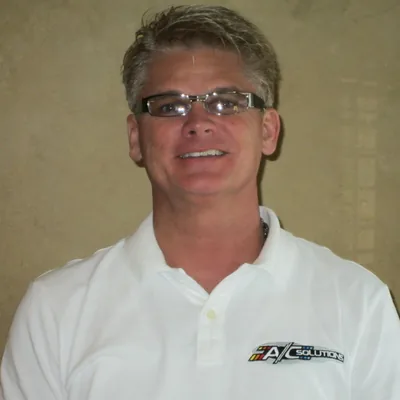
Leonard has spent 34+ years building, running, repairing, scaling and selling HVAC companies — starting his first from scratch in 1993 as the one man doing nearly everything. These systems were built under real pressure, with real payroll on the line. Not in a classroom. And they were built in Florida — the same licensing system, the same cooling-dominated calendar, the same hurricane seasons Broward owners plan around.
Half This Market Lives Behind an Association. Almost Nobody Sells to It Properly.
In most markets, condo work is a niche. In Broward County it is close to half the housing stock — and Florida law is now forcing those buildings to inspect, plan and fund their capital systems.
Census figures put about 48% of Broward's housing units in multifamily buildings — roughly 418,000 units in structures of two units or more. Around 253,800 units sit in buildings of 20-plus units, and 156,000 sit in buildings of 50 or more. That is an enormous base of packaged units on high-rise balconies, closet air handlers, rooftop equipment, common-area systems and cooling towers — nearly all of it governed by an association, a property manager and a board.
Then Florida changed the rules of the game. After years of deferred maintenance caught up with the state's condo stock, the legislature built a standing inspection-and-reserve regime into law:
| What Florida Law Requires | The Specifics | What It Means for an HVAC Contractor |
|---|---|---|
| Milestone structural inspections | Condo and co-op buildings of three habitable stories or more must be inspected by December 31 of the year the building turns 30 — and local ordinances may require it at 25 years for buildings near salt water. Reinspection every 10 years after that. (FS 553.899) | Broward's 1970s–1990s condo stock is squarely inside the inspection window — permanently. Buildings are being examined, documented and forced to face their deferred systems on a recurring clock. |
| Structural integrity reserve studies (SIRS) | Buildings of three habitable stories or more must complete a reserve study at least every 10 years, covering roof, structure, plumbing, electrical, waterproofing — and any other item with a deferred maintenance or replacement cost over $25,000. (FS 718.112) | Central plants, cooling towers, chillers and large common-area systems clear that $25,000 bar easily. Your equipment is being written into buildings' long-range capital plans right now. |
| Reserves can no longer be waived | For budgets adopted on or after December 31, 2024, unit-owner-controlled associations that must obtain a SIRS may not vote to fund less than the study requires for the covered items. (FS 718.112) | The decades-old habit of boards zeroing out reserves is over. Money is being set aside, on a schedule, for building systems. The contractor at the table when the study is priced is the contractor who gets the work. |
Source: Florida Statutes 553.899 (milestone inspections) and 718.112 (structural integrity reserve studies), Official Internet Site of the Florida Legislature. Laws change — confirm current requirements with counsel or the state directly. JordanWORX provides business guidance, not legal advice.
Residential door-knocking wins one customer at a time. An association relationship wins a hundred units at once — and renews. But boards and property managers do not buy the way homeowners buy. They need certificates of insurance, association approvals, uniform pricing, scheduled access, quiet hours, elevator bookings and paperwork that survives a board meeting. Most contractors find that annoying and walk away. That is exactly why the ones who systemize it own the building for a decade. A property manager with six buildings does not want six vendors. He wants one contractor who never makes him look bad.
- Unit-owner work inside association buildings. Hundreds of identical systems, identical replacements, identical upsells — once you are the approved vendor, every unit is a warm lead.
- Common-area service contracts. Clubhouse, lobby, gym, management office — steady commercial-grade work on a contract, not a coupon.
- Board-level replacement projects. When the reserve study prices the equipment, the contractor who helped scope it rarely loses the bid.
Four Out of Five Broward Homes Were Built Before 2000. That Is a Replacement Market.
Growth markets sell installs to builders. Broward is largely built out — which means the money is in what is already standing.
Census American Community Survey data lays it out plainly: of Broward's roughly 869,700 housing units, 80.8% were built before 2000. The 1970s alone account for about 214,800 units — nearly one in four homes in the county. Add the 1980s and 1990s and you get roughly 497,000 units built between 1970 and 1999 — well over half the county's housing.
Read that chart like an operator, not a statistician. Every one of those pre-2000 homes has been through multiple system lifecycles already — in a climate that runs equipment nearly year-round. The house is not going anywhere. The ductwork is original. The electrical panel has opinions. And the homeowner has replaced that system before, which means the conversation is not "if," it is "with whom, and at what quality level."
Replacement Is a Sales System, Not a Season
In a built-out county the install pipeline comes from your own service base. Every maintenance visit on a 15-year-old system is a replacement conversation waiting for a process. Most companies leave that to whichever technician feels chatty.
Old Homes Sell Scope, Not Just Boxes
A 1970s house is rarely a like-for-like swap. Duct sealing, returns, dehumidification, electrical — the homes that need new systems need attached work too. Priced right, that is margin. Ignored, it is your callback.
Hurricane Country Rewards the Prepared
Every South Florida owner plans around storm season — equipment anchoring, surge exposure, post-storm demand spikes and supply crunches. The company with a written storm playbook serves customers while competitors improvise.
Salt Air, 4,730 Degree Days, and What They Do to Your Price Book
Fort Lauderdale's climate is not a bigger version of Orlando's. It is a different operating environment — and the numbers prove it.
| NOAA 1991–2020 Normal | Fort Lauderdale | Orlando, FL | What It Changes |
|---|---|---|---|
| Cooling degree days (base 65°F) | 4,730 | 3,451.6 | 37% more annual cooling load than Orlando. Equipment runs harder, fails sooner, and makes maintenance genuinely valuable. |
| Heating degree days (base 65°F) | 113 | 524.9 | A 42-to-1 cooling-to-heating ratio. There is no winter revenue season to fall back on — the year must be engineered. |
| Cooling degree days, Dec–Feb | 573 | — | Fort Lauderdale runs more cooling in the dead of winter than Orlando runs heating all year. "Slow season" here is a scheduling choice, not a climate fact. |
| Annual average temperature | 77.7°F | — | Near-continuous runtime. Filters, coils, capacitors and condensate systems age on an accelerated clock. |
| Annual precipitation | 62.18 in | 51.45 in | A brutal latent load. Humidity control, drain maintenance and IAQ are real product lines here, not add-ons. |
Source: NOAA National Centers for Environmental Information, U.S. Climate Normals 1991–2020 (annual/seasonal), Fort Lauderdale–Hollywood International Airport station, retrieved from the NCEI data service. Degree days are base 65°F. ncei.noaa.gov
Then add the ocean. Condensers within reach of salt air corrode years ahead of inland equipment — fins, coils, cabinets, contactors. There is a reason every major manufacturer publishes coastal installation guidance and sells corrosion-protected coil options for this coastline. For your business, salt air is not trivia. It is pricing (coastal jobs carry different equipment and different lifespans), maintenance value (coil rinses and protective treatments are legitimately needed here, easy to demonstrate, and easy to sell honestly), and replacement timing (a barrier-island system and a Coral Springs system do not live the same life, and your CRM should know the difference).
Here is the strategic point most owners miss: a market with no heating season punishes companies that drift. There is no January furnace surge to bail out a weak fall. Revenue smoothness in Broward is built, not inherited — through agreements that put you in the home on your schedule, IAQ and humidity work that sells year-round, and a condo book that pays monthly whether it is April or August. That is exactly the kind of engineering we do with owners. Start with the agreements guide →
One State License. Thirty-Plus Permit Offices. Zero Room for Guesswork.
Florida licensing is statewide business strategy. Broward permitting is local logistics. Winners treat them as two different problems.
Florida air conditioning contractors are licensed through the Department of Business and Professional Regulation (DBPR). The structural decision is certified versus registered: a certified license (Class A or Class B air conditioning) works throughout the state, while a registered license confines you to a local jurisdiction. We cover the class distinctions, upgrade timelines and the economics of each on our Orlando & Florida page — every word of it applies in Broward.
What changed locally is worth knowing. Florida's House Bill 735 preempted local occupational licensing to the state, phasing out the county-level certificates of competency that Broward's examining boards historically required — with the legislature extending the phase-out deadlines in later sessions. The practical takeaway for an owner: the license that defines your ceiling is the state license, and if you hold a registered or county-era credential, the path to statewide certification is a growth decision worth pricing out now.
The Tri-County Advantage
Broward sits between Miami-Dade and Palm Beach. A statewide certified license means your service area is a business decision, not a legal one — you can follow property managers and snowbird customers across county lines without a licensing scramble.
Thirty-Plus Permit Jurisdictions
Broward County contains more than 30 municipalities, and change-outs get permitted city by city. Sloppy permit handling in a multi-jurisdiction county silently destroys job margin. Your office needs a documented permit process per city — not tribal knowledge in one dispatcher's head.
The Condo Paper Layer
In association buildings, the permit is only half the paperwork. Insurance certificates, association approvals, elevator reservations and work-hour rules all gate the job. Build it once as a checklist and condo work gets profitable. Wing it and every job leaks hours.
Every housing and population figure on this page came from the U.S. Census Bureau. Every employment and wage number came from the Bureau of Labor Statistics. Every climate figure came from NOAA. The condo inspection and reserve requirements came from the Florida Statutes themselves. Where a number could not be confirmed at the primary source, we left it out rather than repeat it.
Licensing and condo law change. Confirm current requirements directly with DBPR and qualified counsel before making a business decision. JordanWORX provides business guidance — not legal, licensing, or regulatory advice.
Systems Calibrated to This Coast
- A price book that knows the difference between the beach and the suburbs. Coastal equipment, corrosion protection, condo access time and tri-county drive time all belong in the number — most price books carry none of it. Run the break-even calculator →
- A maintenance agreement built for a 4,730-degree-day year. Near-continuous runtime plus salt air makes maintenance honestly valuable here. Build tiers that reflect coastal reality — and hold margin. Agreements guide →
- A condo and HOA go-to-market that actually closes boards. The vendor packet, the COI file, the board presentation, the common-area contract, the unit-owner program behind it. One approved building at a time, built into a book of recurring business.
- A replacement sales process for an 80%-pre-2000 housing stock. Aging-system flags in the CRM, technician-to-comfort-advisor handoffs, and options presented the same way on every single call. Find the leaks first →
- Recruiting and retention in a $60,000-mean-wage metro. You will not out-bid 9,140 seats on wage alone. You win with a pay ladder, real dispatch quality and a company technicians brag about. Recruiting system →
- A storm-season operations playbook. Pre-season customer outreach, equipment anchoring standards, parts stocking, surge staffing and post-storm triage — written down, priced and rehearsed before June.
None of this is theory. It is the same system-by-system build we do with every JordanWORX client — pricing, agreements, people, lead flow and the numbers — calibrated to the county you actually work in.
Frequently Asked Questions
Do you work with HVAC contractors in Fort Lauderdale and Broward County?
Yes. JordanWORX is headquartered in Orlando — a few hours up the turnpike, in the same state, under the same licensing system and the same cooling-dominated calendar. Leonard Jordan has spent 34+ years building, running, scaling and selling HVAC companies in Florida's climate. For Broward owners, that means coaching calibrated to the market you actually operate in, not translated from a four-season playbook.
How big is the Fort Lauderdale HVAC market?
Large. Broward County alone holds roughly 2 million residents and about 870,000 housing units. The Bureau of Labor Statistics reported 9,140 HVACR mechanics and installers employed across the Miami–Fort Lauderdale–West Palm Beach metro as of May 2025 — nearly 78% more than the Orlando metro's 5,140. It is one of the largest concentrations of HVAC work in the Southeast.
Is there a heating season in Fort Lauderdale?
Effectively no. NOAA's 1991–2020 climate normals for Fort Lauderdale–Hollywood International show 4,730 cooling degree days a year against just 113 heating degree days — a 42-to-1 ratio. Fort Lauderdale accumulates more cooling load in December through February alone (573 cooling degree days) than Orlando accumulates heating load in an entire year. Every system you build — agreements, staffing, cash flow — has to be built for a market that cools year-round.
Why does condo work matter so much in Broward County?
Because nearly half the housing stock is multifamily. Census data shows about 48% of Broward's 870,000 housing units sit in buildings of two or more units, and roughly 156,000 units sit in buildings of 50 or more. Florida law now requires milestone structural inspections for condo and co-op buildings of three habitable stories or more, plus structural integrity reserve studies at least every 10 years — and associations can no longer waive reserves for the covered items. Buildings are being forced to inspect, plan and fund capital work. A contractor with real association relationships is positioned in front of that spending.
What licenses does an HVAC contractor need in Broward County?
Florida air conditioning contractors are licensed through the state Department of Business and Professional Regulation — certified licenses work statewide, registered licenses are limited to a local jurisdiction. Florida's House Bill 735 preempted local occupational licensing to the state, phasing out the county-issued certificates of competency that Broward's examining boards once required. Permits are still pulled city by city, and Broward has over 30 municipalities. We are business builders, not license consultants — confirm current requirements directly with DBPR before making decisions.
What should a Fort Lauderdale HVAC owner fix first?
Almost always the same three, in this order. One: your true cost per billable hour — salt-air callbacks, tri-county drive time and condo access logistics all belong in that number, and most owners have never calculated it correctly. Two: a maintenance agreement built for a 4,730-degree-day cooling year, where coastal equipment genuinely needs the visits. Three: a deliberate condo and HOA strategy — decide whether association work is in your model, then build the paperwork, the pricing and the relationships to win it on purpose.