9,140 Technicians. 2.8 Million People. One Season That Never Ends.
The Miami metro employs 9,140 HVACR technicians — the largest HVAC labor market in the Southeast, bigger than Atlanta and nearly double Orlando. Miami-Dade County alone holds 2.8 million people across 1.1 million housing units, and nearly every one of those units depends on mechanical cooling nearly every day of the year.
BLS puts the metro's mean technician wage at $28.85 an hour — $60,000 a year. That is the market rate you are bidding against for every hire. In a metro with 9,140 competing seats, you do not win technicians by guessing at pay. You win with a published wage ladder, a real pay plan, and a company a good technician does not want to leave. Source: BLS OEWS, May 2025, Miami–Fort Lauderdale–West Palm Beach metro; population and housing figures from U.S. Census Bureau QuickFacts, Miami-Dade County (July 1, 2025 estimates).
Big market. Brutal competition. And almost none of your competitors run on real systems. That is the opening.
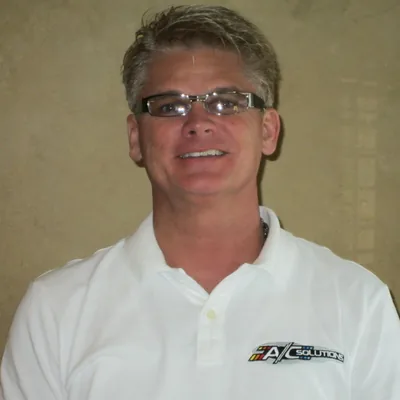
Leonard has spent 34+ years building, running, repairing, scaling and selling HVAC companies — starting his first from scratch in 1993 as the one man doing nearly everything. Today JordanWORX is headquartered in Orlando: same state as you, same DBPR licensing, same Florida Building Code, same hurricane season. These systems were built under real pressure, with real payroll on the line. Not in a classroom.
No Shoulder Season. That Changes Every Number in the Business.
| NOAA 1991–2020 Normal | Miami | Orlando | What It Changes |
|---|---|---|---|
| Cooling degree days (base 65°F) | 4,575 | 3,424 | A third more cooling load than Orlando — and Orlando is already one of the heaviest cooling markets in the country. |
| Heating degree days (base 65°F) | 128 | 571 | Heating revenue is a rounding error. The entire business rides on cooling economics. |
| Days at or above 90°F | 79.8 | 96.7 | Fewer extreme peaks than Orlando — the sea breeze caps the highs. Miami's load is relentless, not spiky. |
| Nights at or below 32°F | 0.1 | 2.3 | No freeze events. No no-heat emergency season. No winter demand spike to staff for. |
| Annual precipitation | 61.90 in | 50.73 in | A heavier latent load. Humidity control, drain lines and mold calls are core work, not side work. |
Source: NOAA National Centers for Environmental Information, U.S. Climate Normals 1991–2020 (annual/seasonal), Miami International Airport and Orlando International Airport stations, retrieved from the NCEI data service. Degree days are base 65°F. ncei.noaa.gov
Miami logs fewer 90-degree days than Orlando — yet carries a third more cooling load. The heat here is not about peaks. It is about never stopping. Warm nights, warm winters, compressors that run in January. Equipment accumulates run-hours faster than almost anywhere in the country, which compresses failure timelines, shortens replacement cycles, and makes real maintenance worth real money.
Here is what a 36-to-1 cooling-to-heating ratio actually does to the business:
- There is no natural slow season to hide in — or to fix things in. Four-season coaches tell you to convert your software or run training weeks in the winter lull. Miami does not send you a lull. Training, conversions and hiring have to be scheduled like jobs, on purpose, or they never happen.
- Revenue is steadier — and that cuts both ways. Less feast-and-famine than a two-season market, which is a gift. But it also means an underpriced billable hour bleeds you all twelve months instead of six. Pricing mistakes compound faster here than almost anywhere.
- Maintenance agreements sell on prevention, not seasonal prep. "Get ready for summer" is a weak pitch in a market where summer never left. The Miami agreement sells on capacity, efficiency, corrosion control and priority status when the heat index tops 100 — and it needs a schedule built around demand valleys that are shallower and shorter than the national playbook assumes.
- Your technicians never get a season off either. Year-round load means year-round on-call and year-round burnout risk. The rotation, the pay plan and the days off have to be designed — because the calendar will not provide them.
The Coast Is Eating Your Customers' Equipment. Price Like It.
From Miami Beach to Homestead, salt-laden air is quietly rewriting equipment lifespans — and most contractors never put it in the price book.
Salt accelerates corrosion on condenser coils, cabinets, fasteners and electrical connections. The result is degraded heat transfer, rising repair frequency, and outdoor units that die years before their inland twins. Engineering guidance for coastal projects is blunt about it: condenser coils within roughly three to five miles of the ocean should carry salt-spray-rated protection tested to ASTM B117, and within a mile of the water, both the condenser and evaporator coils should. Source: 360 Engineering, "Salt in the Air, Rust Everywhere: HVAC and Plumbing Design for Coastal Projects." 360eng.com
Coated Coils Belong in the Price Book
Factory coil coatings and marine-grade options should be standard line items on every coastal quote — presented as protection, priced at margin, and backed by the corrosion you can show the customer on their current unit.
The Coastal Agreement Is Different
A maintenance agreement written for the beach includes a coil rinse cadence, fastener and cabinet inspection, and photo documentation of corrosion at every visit. That documentation makes the eventual replacement conversation honest, easy and yours.
Zone Your Pricing Like You Zone Your Trucks
A condenser on a Miami Beach rooftop and one in a Doral backyard live in different worlds. Repair-versus-replace math, agreement pricing and equipment recommendations should recognize the difference — deliberately, not truck by truck.
With 128 heating degree days a year, Miami heating is heat pumps and electric strips. Combustion work is essentially zero. That simplifies truck stock and training — so spend the training budget where this market actually lives: airflow, refrigerant discipline, humidity control, controls, and corrosion. A price book imported from a gas-furnace market is carrying dead weight here.
Six Months a Year, the Whole Market Operates Under a Clock
Hurricane season runs June 1 through November 30 (NOAA/National Hurricane Center). You cannot schedule a storm — but every year, the season itself is a certainty. The contractors who treat it as an annual operating condition, with a written plan, outperform the ones who improvise every time a cone appears on the news.
- Before the season: pre-storm maintenance and tie-down checks marketed to your agreement base in spring, parts and gas stocked, generator plan for your own office, and a storm-week scheduling policy your CSRs can run without you.
- When a storm threatens: demand spikes, supply chains wobble, and crews have families too. Decide in advance who works, what gets rescheduled, and how customers get communicated with.
- After a storm: surge-flooded and wind-damaged equipment drives a wave of replacement work. Florida's price-gouging statute (F.S. 501.160) activates in a declared emergency — write your storm-pricing policy in May, not in the parking lot. The contractors who show up fast, document damage honestly and price straight own those neighborhoods for a decade.
All of Miami-Dade County sits inside the Florida Building Code's High-Velocity Hurricane Zone, with Risk Category II design wind speeds running roughly 170–180 mph. Exterior products carry Miami-Dade Notices of Acceptance (NOA), outdoor equipment must be anchored to resist real wind loads, and permitting is enforced accordingly. That raises the cost of doing it right — and raises the value of a contractor who does. Permit discipline, anchorage done to code, and clean inspections are a sales asset in this county. Put them in your story.
Licensing: The County Rules Changed in 2023
Florida House Bill 735 preempted local occupational licensing statewide, and Miami-Dade's local specialty contractor licenses — including the mechanical categories — expired on July 1, 2023. HVAC contracting in Miami now runs on the state system: a Florida DBPR Class A air-conditioning license (unlimited) or Class B (capped at 25 tons of cooling and 500,000 Btu of heating per system, per Florida Statute 489.105). If commercial work on the causeway hotels and downtown towers is in your growth plan, the class you hold — and the certified-versus-registered distinction — is a business decision worth real analysis. Sources: City of Miami, "Florida Contractor License Category Preemption"; Miami-Dade County contractor licensing notices; Florida Statutes §489.105.
Every climate figure on this page came from NOAA. Every employment and wage number came from the Bureau of Labor Statistics. Every population figure came from the U.S. Census Bureau. Licensing facts came from the City of Miami, Miami-Dade County, and the Florida Statutes. Where a number could not be confirmed at the primary source, we left it out rather than repeat it.
Licensing and code requirements change. Confirm current requirements directly with DBPR and your building department before making a business decision. JordanWORX provides business guidance — not legal, licensing, or regulatory advice.
Three-Quarters of Your Market Does Not Default to English
In Miami-Dade County, 75.3% of residents age five and up speak a language other than English at home, and 70.3% of the county is Hispanic or Latino. Source: U.S. Census Bureau QuickFacts, Miami-Dade County (2020–2024 American Community Survey).
That is not a demographic footnote. It is one of the largest operational facts in your business — and most coaching programs never mention it.
Booking Rate Lives at the Phone
If your phone cannot book a call in Spanish, you are not competing for the majority of this county — you are donating those calls to somebody who can. Bilingual CSR capability is not a bonus in Miami. It is table stakes, and it shows up directly in booking rate.
Trust Closes in the Customer's Language
Repair authorizations, replacement proposals, agreement renewals — they all close on trust, and trust moves fastest in the language the customer thinks in. Bilingual technicians close more, get better reviews, and deserve a line on your wage ladder that says so.
Market in Both Languages or Pay for Half a Market
Your Business Profile, your review responses, your ads and your agreement materials should work in English and Spanish. The contractor who does this deliberately buys visibility his competitors are leaving on the table — at the same ad spend.
The same fact that complicates your marketing is an asset in your recruiting. Miami's bilingual technician pool is deep, and a shop that runs professional systems — real dispatch, real pay plans, real training — stands out fast in a market where most shops run on chaos.
Systems Calibrated to This Market
- A price book built on your real cost per billable hour — carrying Miami drive time, coated-coil options for the coast, and margins that hold across a twelve-month season. Run the break-even calculator →
- A year-round maintenance agreement that sells on prevention, corrosion control and priority status — with a visit schedule built around Miami's shallow demand valleys, not a spring-and-fall template. Agreements guide →
- Recruiting against 9,140 competing seats. A published wage ladder that pays for bilingual capability, pay plans with guardrails, and the shop a good technician does not leave. Recruiting system →
- Dispatch zoning for a market cut by water. The Beach, the Gables, Kendall, Doral, Homestead — causeways and I-95 make bad zoning expensive. Zone deliberately, then defend the zones. Dispatch rules →
- A storm-season operating plan — pre-season maintenance push, storm-week scheduling policy, written storm pricing, and the post-storm response that wins neighborhoods for years.
- A KPI dashboard that catches the leaks a no-slow-season market hides — because steady revenue is where quiet margin erosion loves to live. Find your profit leaks →
Frequently Asked Questions
Do you work with HVAC contractors in Miami?
Yes. JordanWORX is headquartered in Orlando — about three and a half hours up the Turnpike — and works with HVAC contractors across Florida and nationally. Same state, same DBPR licensing, same Florida Building Code, same hurricane season. And because everything we build starts from your own numbers rather than a regional template, the systems are calibrated to your market, not ours.
How big is the Miami HVAC market?
The Bureau of Labor Statistics reported 9,140 HVACR mechanics and installers employed in the Miami–Fort Lauderdale–West Palm Beach metro area as of May 2025 — more than Atlanta (7,060) and Orlando (5,140). It is the largest HVAC labor market in the Southeast, and one of the most competitive.
Does Miami really have no heating season?
Essentially none. NOAA's 1991–2020 normals for Miami International Airport show 4,575 cooling degree days against 128 heating degree days — a 36-to-1 ratio — and one-tenth of one night per year at or below freezing. Heating revenue is a rounding error here. The whole business has to be built on cooling economics.
What license does an HVAC contractor need in Miami-Dade?
A state license through the Florida DBPR — Class A air-conditioning (unlimited) or Class B (capped at 25 tons of cooling and 500,000 Btu of heating per system under Florida Statute 489.105). Florida House Bill 735 preempted local occupational licensing, and Miami-Dade's local specialty contractor licenses expired July 1, 2023. Licensing rules change — confirm current requirements directly with DBPR. We are business builders, not license consultants.
How does salt air change the business?
Salt-laden coastal air corrodes coils, cabinets and electrical connections, which shortens equipment life and degrades heat transfer. Engineering guidance calls for salt-spray-rated coil protection (ASTM B117) on condensers within roughly three to five miles of the coast, and on both coils within a mile. For a contractor that means coated-coil options in the price book, a rinse cadence in coastal maintenance agreements, and photo documentation that makes replacement conversations honest and easy.
What should a Miami HVAC contractor fix first?
Almost always the same three, in this order. One: your true cost per billable hour — in a market with no slow season, an underpriced hour compounds all twelve months. Two: booking rate, including how your phone handles the 75% of this county that does not default to English. Three: a maintenance agreement built for equipment that never gets a season off.