Florida's Second-Largest HVAC Market. And One of Its Hardest to Win Without Systems.
The Tampa–St. Petersburg–Clearwater metro employs 6,090 HVACR technicians — more than Orlando, nearly double Jacksonville, and second in Florida only to Miami–Fort Lauderdale. The same BLS release puts the mean wage here at $26.89 per hour, about $55,940 per year, against 39,160 technicians statewide.
Read those numbers the way an operator reads them. Thousands of competing seats means the labor war is real: every good technician you want is already on somebody's payroll, and every mediocre pay plan you run is a recruiting ad for the shop across town. It also means the customer has choices. In a market this deep, the contractor with documented systems — pricing, booking, agreements, follow-up — takes the profitable work. The contractor without them takes what is left.
That is the whole reason this page exists. Not to tell you Tampa is hot. You know it is hot. But to show you, with numbers you can check, why the standard national coaching playbook is mis-built for this metro — and what to build instead.
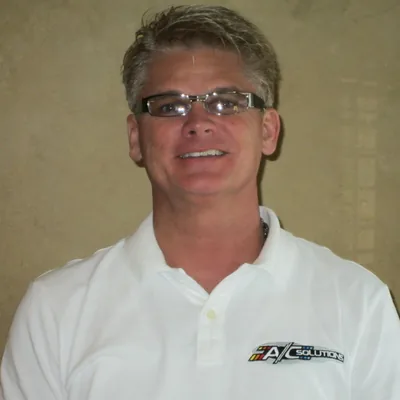
Leonard has spent 34+ years building, running, repairing, scaling and selling HVAC companies — starting his first from scratch in 1993 as the one man doing nearly everything. These systems were built under real pressure, with real payroll on the line. Not in a classroom.
Your Cooling Season Is a Marathon. Plan Like It.
| NOAA 1991–2020 Normal | Tampa International | Orlando International | What It Changes |
|---|---|---|---|
| Cooling degree days (base 65°F) | 3,611 | 3,424 | Tampa carries a heavier annual cooling load than even Orlando. Equipment here works more, ages faster, and makes maintenance worth more. |
| Heating degree days (base 65°F) | 539 | 571 | Cooling outweighs heating almost 7 to 1. There is no winter season to hide behind — the business runs on cooling economics year-round. |
| Days at or above 90°F | 72.5 | 96.7 | The bay breeze caps the thermometer — but not the load. The demand hides in humidity and warm nights, not headline highs. |
| Nights at or below 32°F | 1.3 | 2.3 | Heating emergencies are a rounding error. A "fall furnace tune-up" agreement imported from a northern playbook is dead on arrival here. |
| Annual precipitation | 46.30 in | 50.73 in | A heavy latent load. Condensate, coils, drain lines and dehumidification drive real call volume — and real agreement scope. |
Source: NOAA National Centers for Environmental Information, U.S. Climate Normals 1991–2020 (annual/seasonal), stations USW00012842 (Tampa International Airport) and USW00012815 (Orlando International Airport), retrieved from the NCEI data service. Degree days are base 65°F. ncei.noaa.gov
Look at the third row again, because it is the one owners miss. Tampa logs fewer 90-degree days than Orlando — yet more total cooling load. That is the signature of a marathon market: the sea breeze shaves the afternoon peak while the humidity and warm nights keep compressors grinding from March into November.
- Runtime, not peak, is your revenue driver. Long steady runtime means predictable wear: capacitors, contactors, fan motors, coils. That is maintenance-agreement gold — if your visit checklist is built for it.
- The latent side is a product line. Condensate backups, biological growth on coils, drain-line calls and humidity complaints are recurring, repeatable revenue in a 46-inch-rain climate. Put them in the price book with real tasks and real margins.
- There is no slow season to fix the business in. The national advice — "do your software conversion in winter" — assumes a winter. Your valleys are short and they move. Capacity planning, training weeks and hiring have to be scheduled deliberately, not left to a lull that never comes.
A marathon market punishes thin systems slowly, then all at once. Equipment that runs nine months a year exposes weak maintenance programs, weak pricing, and weak capacity planning faster than any four-season market ever will. The upside: the same runtime makes a properly built agreement program more valuable here than almost anywhere in the country.
You Operate in the Most Lightning-Dense State in America. Price Like It.
Tampa Bay sits at the western end of the Tampa-to-Titusville corridor Floridians call "Lightning Alley" — and almost no coaching program will ever tell you what that does to an HVAC P&L.
The numbers are not folklore. The Florida Division of Emergency Management puts the state at roughly 1.4 million cloud-to-ground lightning strikes in an average year and calls Florida the "Lightning Capital of the United States." The Florida Climate Center at FSU reports the western half of the peninsula sees more than 80 days a year with thunder and lightning — a summer storm frequency it compares to the world's most active thunderstorm regions. And Vaisala's annual lightning report has repeatedly ranked Florida first in the nation in lightning density.
Every one of those strikes near a home puts voltage on the line. And the equipment you install today is more electronic — and less forgiving — than anything the trade has ever hung on a wall. Inverter drives, communicating controls, ECM motors, integrated boards. A surge that a 1998 contactor shrugged off will take out a modern system's brain.
The Summer Surge-Call Stream
Afternoon storms roll through on schedule from June to September. Behind each one: tripped systems, blown capacitors, fried boards, dead thermostats. That is a demand curve you can staff for, stock trucks for, and price deliberately — instead of treating every storm as a surprise.
Surge Protection as an Agreement Add-On
An HVAC-rated surge protector is a legitimate, flat-rate, high-margin line item in this market — and a natural attachment to every maintenance agreement. Protect the equipment, document the install, and give the customer a reason to call you first when the storm wins anyway.
Train the Diagnosis, Protect the Margin
Surge damage is a specific diagnosis: boards, drives and controls, documented with photos and readings. Technicians who can prove it protect the customer's insurance claim and your reputation. Technicians who guess eat callbacks — and give away compressors.
Do not sell surge protection as a bolt-on when the technician happens to remember. Put it in the price book as a flat-rate task, put the offer script in the maintenance visit checklist, and track attachment rate like you track booking rate. In a market with 80+ thunderstorm days a year, a protection conversation on every agreement visit is not upselling — it is the job. See how agreements carry it →
Sources: Florida Division of Emergency Management, Thunderstorms & Lightning — floridadisaster.org; Florida Climate Center (FSU), Thunderstorms — climatecenter.fsu.edu; Vaisala Annual Lightning Report rankings as reported by Spectrum Bay News 9 — baynews9.com.
51,622 New Residents in a Year. 1.5 Million Existing Homes. Run Both Engines.
The U.S. Census Bureau reported that the Tampa metro added 51,622 residents between July 2022 and July 2023 — the fifth-largest numeric gain of any metro in the country. The Census Bureau's American Community Survey puts the metro at 3,424,560 people and 1,563,786 housing units as of 2024. And the Census Building Permits Survey shows the metro authorizing roughly 20,000 or more new housing units a year in most recent years — 23,007 in 2025 alone.
For an HVAC contractor, that is two distinct revenue engines. Most owners run one and starve the other.
The New-Construction Engine
Twenty thousand new units a year means builder relationships, tract volume, and predictable installation work. It also means thin margins, slow pay, and someone else's schedule. New construction can fill trucks — but it builds someone else's balance sheet unless you cap its share of your mix and price it on your real numbers.
The Replacement-and-Service Engine
Here is the compounding play: every builder-grade system installed in this decade's construction wave goes on a clock the day it is commissioned — and in a 3,611-cooling-degree-day climate, that clock runs fast. The contractor who captures those homeowners with a maintenance agreement in year one owns the repairs in year five and the replacement after that.
- Growth hides pricing sins. In a market adding 50,000 people a year, a busy schedule feels like success. Busy is not profitable. Volume forgives bad math right up until it doesn't. Run the break-even numbers →
- New rooftops move the map. Wesley Chapel, Riverview and the growth corridors keep pushing the service area outward. Drive time is unbilled labor — re-zone dispatch deliberately every year, or sprawl will quietly eat your capacity.
- Every closing is a lead event. Thousands of households arrive every month with no HVAC relationship at all. A systematic new-mover program — not a hope and a lawn sign — is worth real money here. Build the lead engine →
Sources: U.S. Census Bureau, Vintage 2023 metro population estimates — census.gov; American Community Survey 2024 1-year estimates via Census Reporter — censusreporter.org; U.S. Census Bureau Building Permits Survey, Tampa–St. Petersburg–Clearwater MSA, retrieved via FRED series TAMP312BPPRIV — fred.stlouisfed.org.
The Most Surge-Exposed Metro in America Needs a Readiness Partner. Be It.
This is not storm-chasing. It is the opposite: a permanent, professional readiness position that earns trust in the years nothing happens — and earns loyalty in the years something does.
The physics of Tampa Bay are permanent. The Gulf runs shallow for a long way offshore, the bay is funnel-shaped, and a large share of the population lives low — a 2015 catastrophe-modeling analysis by Karen Clark & Company named Tampa the single most vulnerable U.S. city to storm surge flooding, projecting roughly $175 billion in losses from a 100-year hurricane, with about half of Tampa's population living below 10 feet of elevation. A 2013 World Bank study ranked the city seventh in the world for flood-damage exposure. And the last direct hit from a major hurricane came in October 1921 — when Hillsborough County held a fraction of today's population.
You cannot control any of that. You can control what your company is to its customers when the forecast cone shows up. Here is the readiness position, built as systems:
- A pre-season readiness visit inside the agreement. Check condenser anchoring and strapping, clear condensate paths and drainage, verify surge protection, photograph and document equipment condition. Real scope, real value, scheduled every spring — before anyone is watching a cone.
- A documented post-storm triage protocol. Who answers, in what order, at what rates, with what safety rules for flooded equipment. Decide it in the calm. Flood-exposed electrical components and systems are a safety call, not a judgment call — put the standard in writing and train it.
- Straight talk on flooded equipment. Salt water and control boards do not reconcile. The contractor who documents honestly, works cleanly with adjusters, and never sells fear is the contractor this market keeps for twenty years.
- A capacity and cash plan for the surge after the storm. Demand spikes, supply tightens, receivables stretch while insurance pays. Owners with a cash buffer and a surge staffing plan serve their customers; owners without one burn out their crews and their credit line in the same month.
Storm work is a test your company either passes or fails in public. Every review, every referral, every agreement renewal for the next decade is shaped by how you operate in one bad week. Readiness is not a season here. It is a system you build once and run every year.
Sources: Karen Clark & Company 2015 storm-surge vulnerability analysis and World Bank 2013 flood-risk ranking, as reported by The Hill — thehill.com; 1921 Tarpon Springs hurricane history — fox13news.com.
The License Is Statewide. The Permits Are Local. Both Are Business Decisions.
Florida licenses air-conditioning contractors through the Department of Business and Professional Regulation, and the class you hold draws a hard line around what you can bid. Florida Statute 489.105 defines a Class A air-conditioning contractor as one whose services are unlimited, and a Class B air-conditioning contractor as one whose services are "limited to 25 tons of cooling and 500,000 Btu of heating in any one system."
Read that as an operator: if light-commercial work in this growth market is on your roadmap — new retail, flex space, the hospitality stock along the beaches — the Class B ceiling is a revenue ceiling, and the move to Class A is a planning decision measured in years, not weeks. Florida's certified-versus-registered distinction and the time-gated upgrade paths are covered in detail on our Orlando & Florida page.
The Permit Reality in Hillsborough and Pinellas
- Hillsborough County runs building and subtrade permitting through its online HillsGovHub portal — including projects "requiring only a mechanical permit," which covers the repair or replacement of an existing heating or air-conditioning system. Change-outs are permitted work here. Build the permit workflow into your install process, not around it.
- Pinellas County states plainly that most jobs changing a home's mechanical systems require a permit, runs applications through its online Access Portal, and requires a recorded Notice of Commencement on HVAC projects over $7,500.
- Permits are a margin line, not a nuisance. Fees, portal time and inspection scheduling are real overhead. Price them into every change-out, and make the pulled permit part of your professional pitch — because the low-ball competitor skipping permits is handing you the trust conversation.
Every licensing definition on this page came from the Florida Statutes. Every permit statement came from the county's own website. Every employment number came from the Bureau of Labor Statistics, and every climate figure from NOAA. Where a number could not be confirmed at the primary source, we left it out rather than repeat it.
Licensing and permitting rules change. Confirm current requirements directly with DBPR, Hillsborough County and Pinellas County before making a business decision. JordanWORX provides business guidance — not legal, licensing, or regulatory advice.
Sources: Florida Statutes §489.105 — leg.state.fl.us; Hillsborough County HillsGovHub permit resources — hcfl.gov; Pinellas County building permits — pinellas.gov.
Systems Calibrated to This Market
Not advice from a stage. Documented, working systems — built with you, calibrated to a marathon cooling season, a lightning economy, and a growth map that will not sit still.
- A price book built on your real Tampa overhead. Your true cost per billable hour, with permits, drive time across the bay bridges, and year-round equipment wear priced in — not a rate copied from a shop in a four-season market. Run the break-even calculator →
- A maintenance agreement built for 3,611 cooling degree days. Cooling-first visit schedules, a latent-side checklist that earns its price, surge protection attached as a standard offer, and the spring readiness visit built in. Agreements guide →
- A flat-rate task list that carries the lightning economy. Surge diagnosis, board and drive replacement, protection installs — priced as tasks with real margins, not improvised on a tailgate at 5 p.m. Flat-rate template →
- Recruiting against 6,090 competing seats. Job ads that pull, a published wage ladder, pay plans with guardrails — because in Florida's second-largest HVAC labor market you win technicians on the whole job, not the hourly number alone. Recruiting system →
- Dispatch zoning for a metro split by water. Tampa, the beaches, Pasco's growth corridors and Brandon–Riverview are different operating problems joined by bridges. Zone deliberately, then defend the zones. Dispatch rules →
- A profit-leak audit before a growth push. Growth multiplies whatever you feed it. Feed it a leaking price book and you scale the leak. Find the leaks →
Frequently Asked Questions
Do you actually know the Tampa Bay market?
JordanWORX is headquartered in Orlando — about 90 minutes up I-4, on the same peninsula, under the same sun, the same afternoon lightning and the same hurricane calendar. Leonard Jordan has spent 34+ years building, running and selling HVAC companies, and the Florida-specific systems he builds — cooling-season capacity plans, storm-season protocols, agreement programs built for year-round heat — were built for exactly the conditions Tampa Bay contractors operate in every day.
How big is the Tampa Bay HVAC market?
The Bureau of Labor Statistics reported 6,090 HVACR mechanics and installers employed in the Tampa–St. Petersburg–Clearwater metro as of May 2025, at a mean wage of $26.89 per hour — about $55,940 per year. For scale, Orlando employed 5,140 and Jacksonville 3,340. Tampa Bay is the second-largest HVAC labor market in Florida, behind only Miami–Fort Lauderdale.
Why does lightning matter so much to a Tampa HVAC business?
Florida records roughly 1.4 million cloud-to-ground lightning strikes in an average year, and the western half of the peninsula sees more than 80 days of thunder and lightning annually. Every strike near a home puts voltage on the line, and modern inverter-driven equipment carries boards that do not forgive it. That means a steady stream of surge-related service calls every summer — and a natural surge-protection add-on that belongs in your maintenance agreement, priced and presented as a system, not an afterthought.
Is Tampa Bay a new-construction market or a replacement market?
Both — and that is the point. The metro has authorized roughly 20,000 or more new housing units in most recent years, while the existing stock stands at more than 1.5 million units. New construction feeds volume today; the builder-grade equipment going into those homes feeds replacement and service demand on a predictable clock. Contractors who capture those homeowners early with a maintenance agreement own the replacement when it comes.
What license do I need to run an HVAC business in Tampa?
Florida licenses air-conditioning contractors statewide through DBPR. Under Florida Statute 489.105, a Class A air-conditioning contractor's services are unlimited, while a Class B contractor is limited to 25 tons of cooling and 500,000 Btu of heating in any one system. Hillsborough and Pinellas both require permits for mechanical work, including change-outs, through their online portals. Rules change — confirm current requirements directly with DBPR and the county before making a business decision.
What should a Tampa HVAC contractor fix first?
Almost always the same three, in this order. One: your true cost per billable hour — a year-round cooling market hides overhead problems until they surface as a cash crisis. Two: booking rate, because in a metro with thousands of competing technicians, every unbooked call funds a competitor. Three: a maintenance agreement built for this climate — cooling-first visit schedules, surge protection attached, hurricane-season readiness built in.